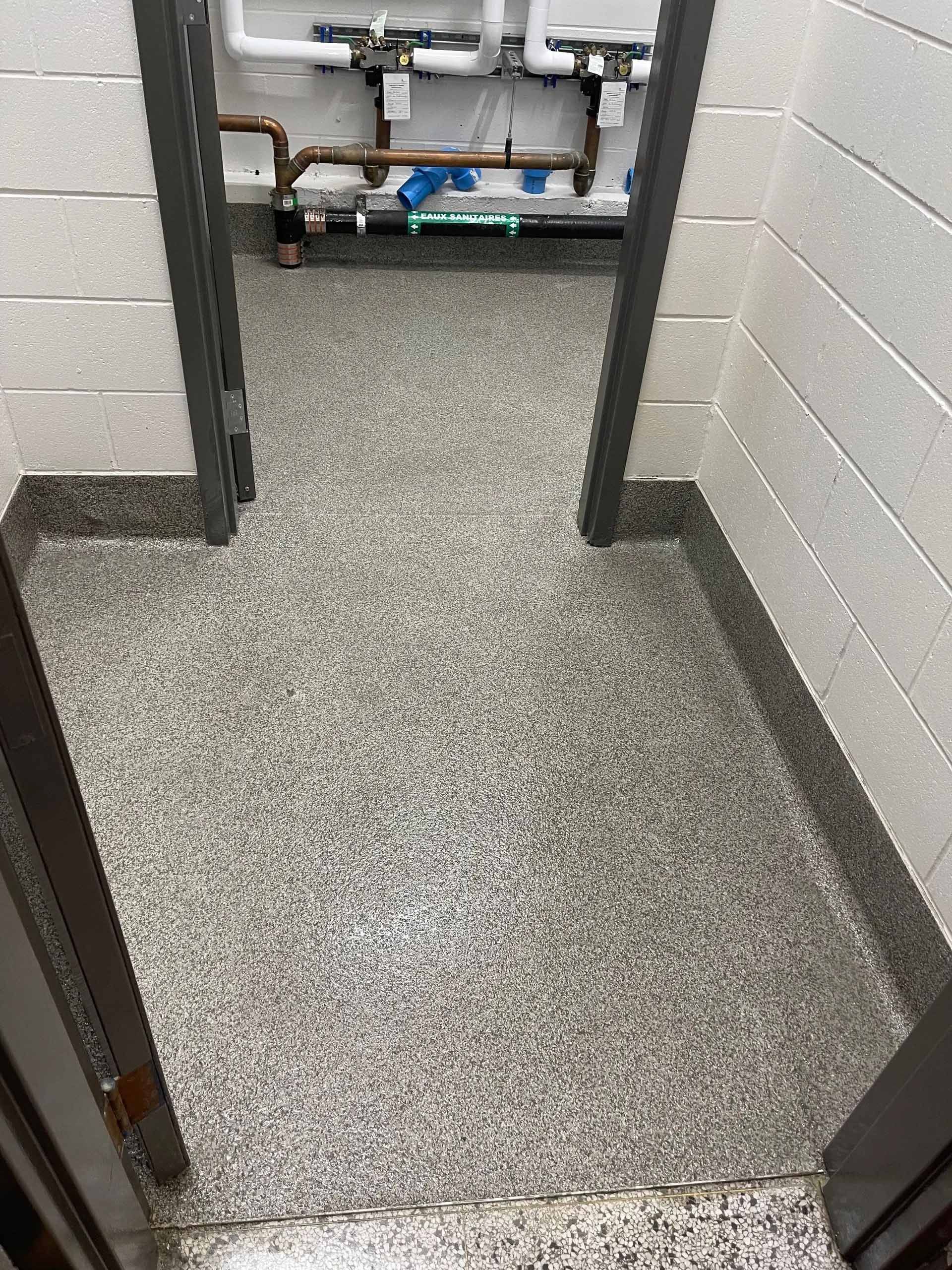
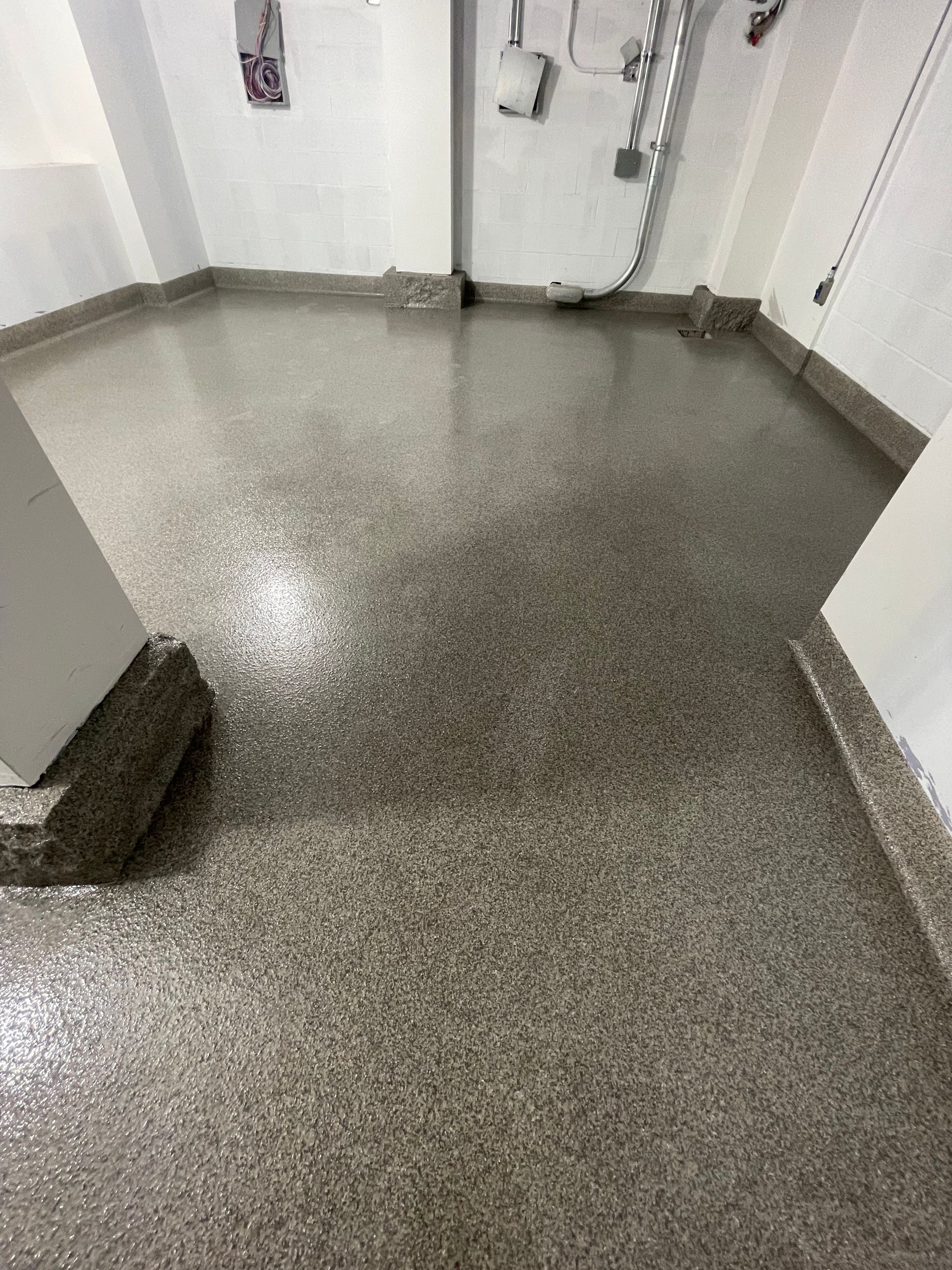
Quartz epoxy addresses a specific need: providing a slip-resistant surface where water or liquids create slipping hazards. Béton Blanchette installs slip-resistant quartz epoxy floors in Montreal, Laval, and on the North and South Shores.
A safe floor protects your team and your clients Make the switch to quartz epoxy.
Why Do Wet Commercial Zones Need a Slip-Resistant Floor?
A smooth floor becomes slippery the moment it gets wet. In a commercial kitchen, spills are inevitable. In a public washroom, water on the floor is part of the normal environment.
The Risks of Commercial Floors
•Employee and customer injuries
•Claims and legal complications
•Increased insurance premiums
A quartz floor coating that maintains its grip in wet conditions reduces these risks.
How DoesQuartz Epoxy Work?
Quartz granules are embedded in the epoxy resin, creating a texture that provides mechanical traction. Unlike a surface treatment that wears off, the granules are part of the coating itself.
Technical Advantages of Quartz
•Grip even on wet or oily surfaces
•Chemical resistance to industrial cleaning products
•Slip-resistant properties that last the lifetime of the floor
Which Commercial Spaces IsQuartz Epoxy Recommended For?
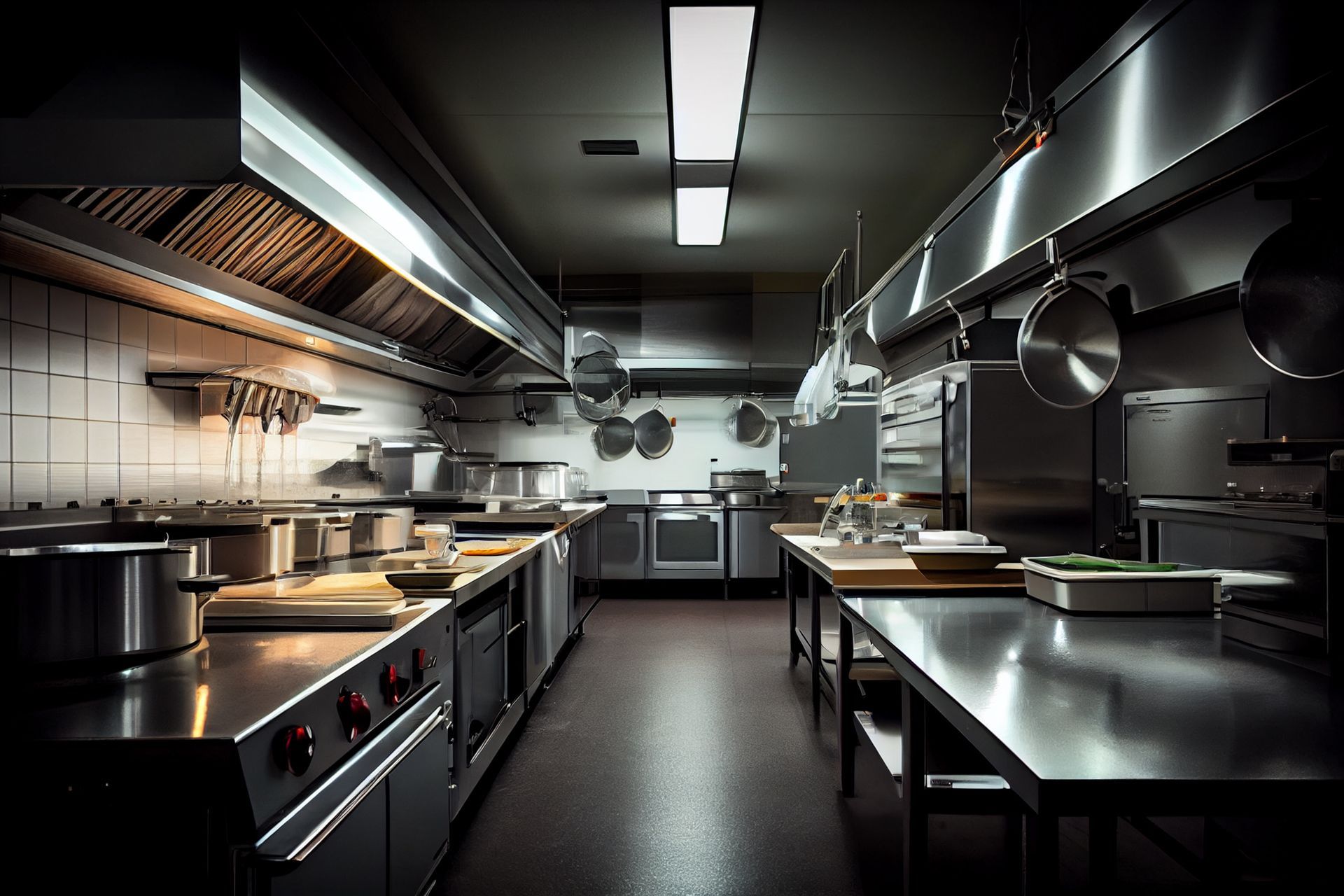
Commercial Kitchens and Restaurants
Kitchens see constant traffic with water, oil, and spills. A slip-resistant floor prevents accidents.
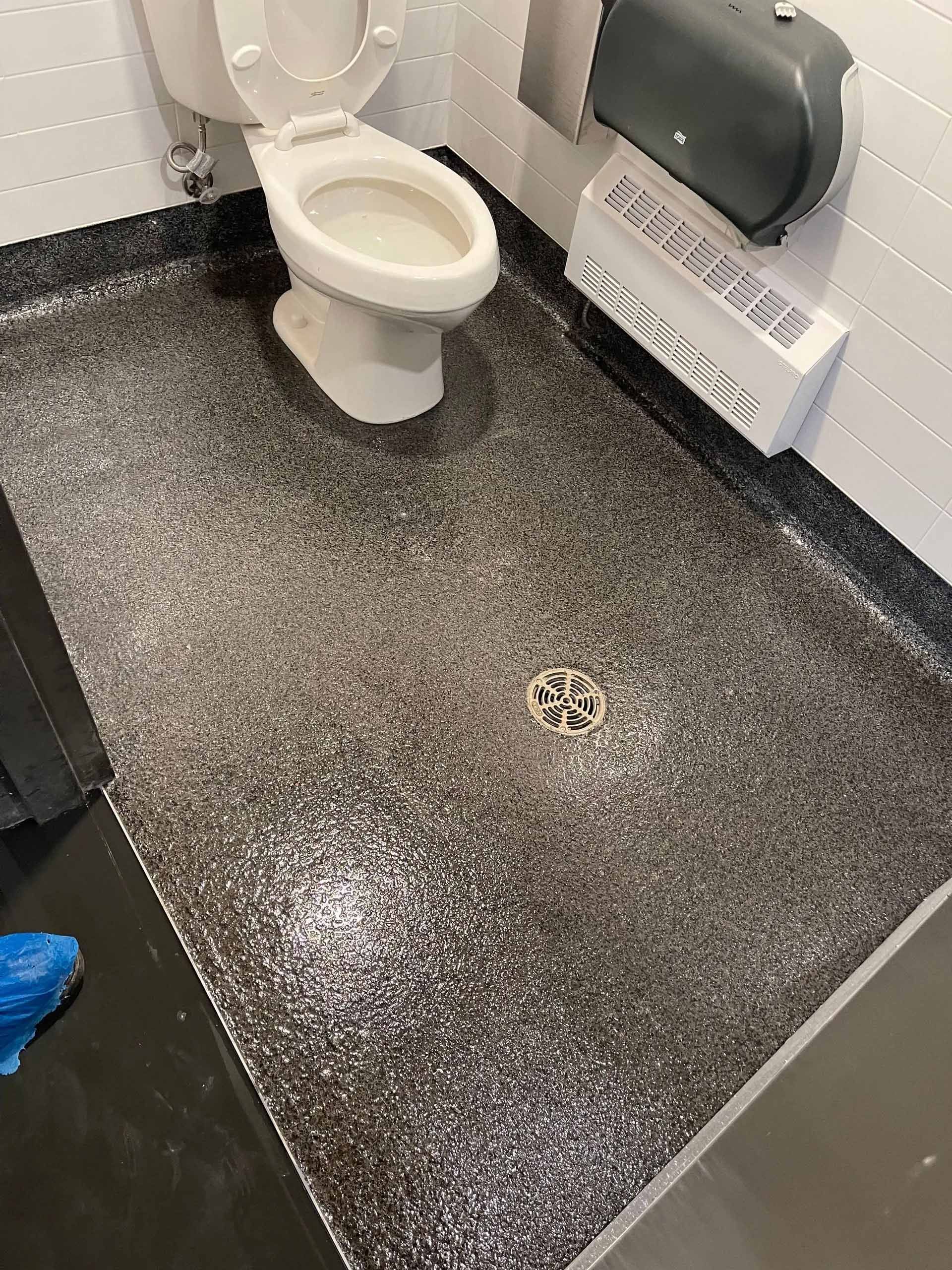
Commercial and Institutional Washrooms
Office buildings, shopping centres, public facilities. Water on the floor is normal; the floor needs to maintain safety.
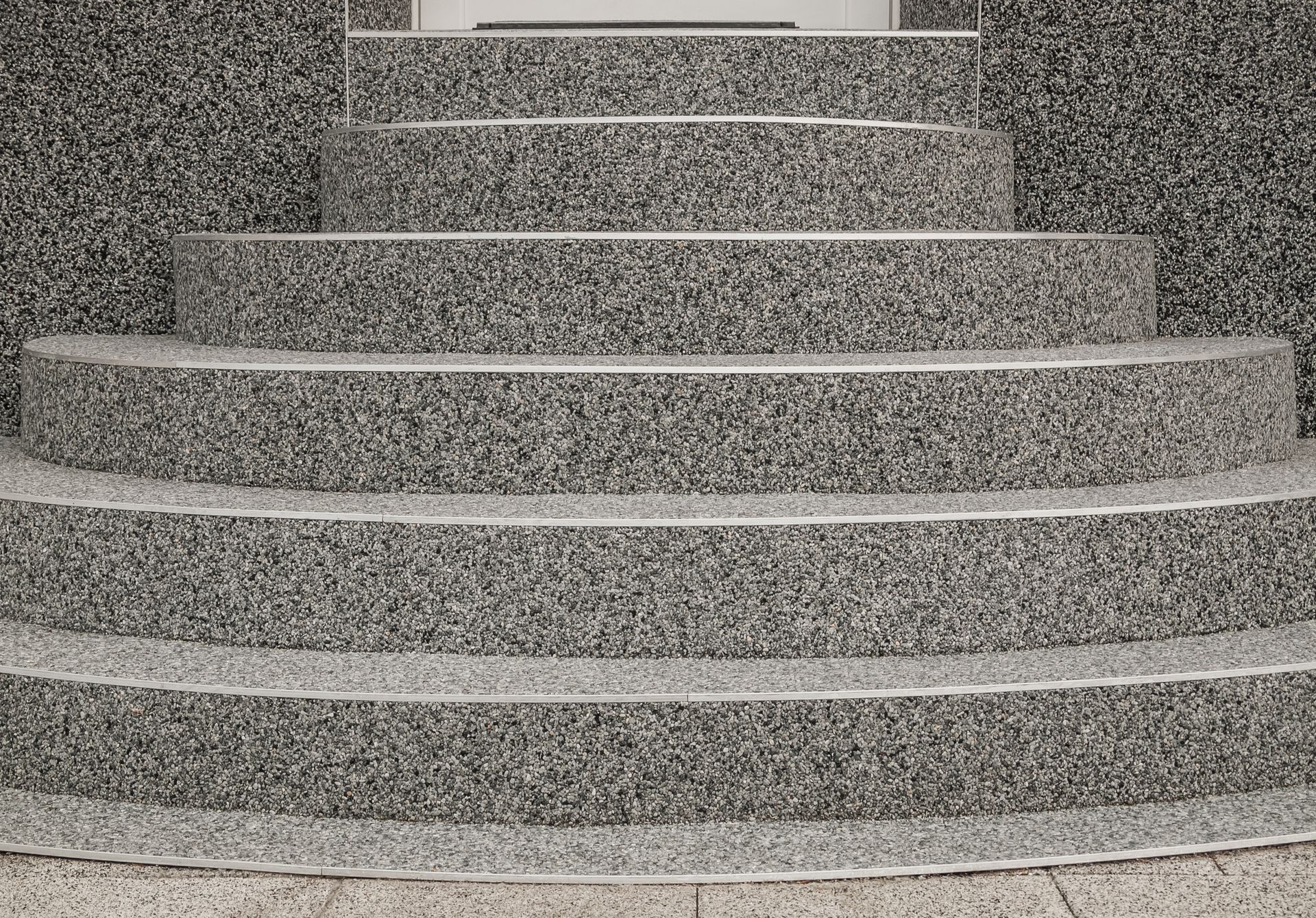
Entryways Exposed to the Elements
Entryways accumulate water, melting snow, and salt during winter. Quartz epoxy resists de-icing products.
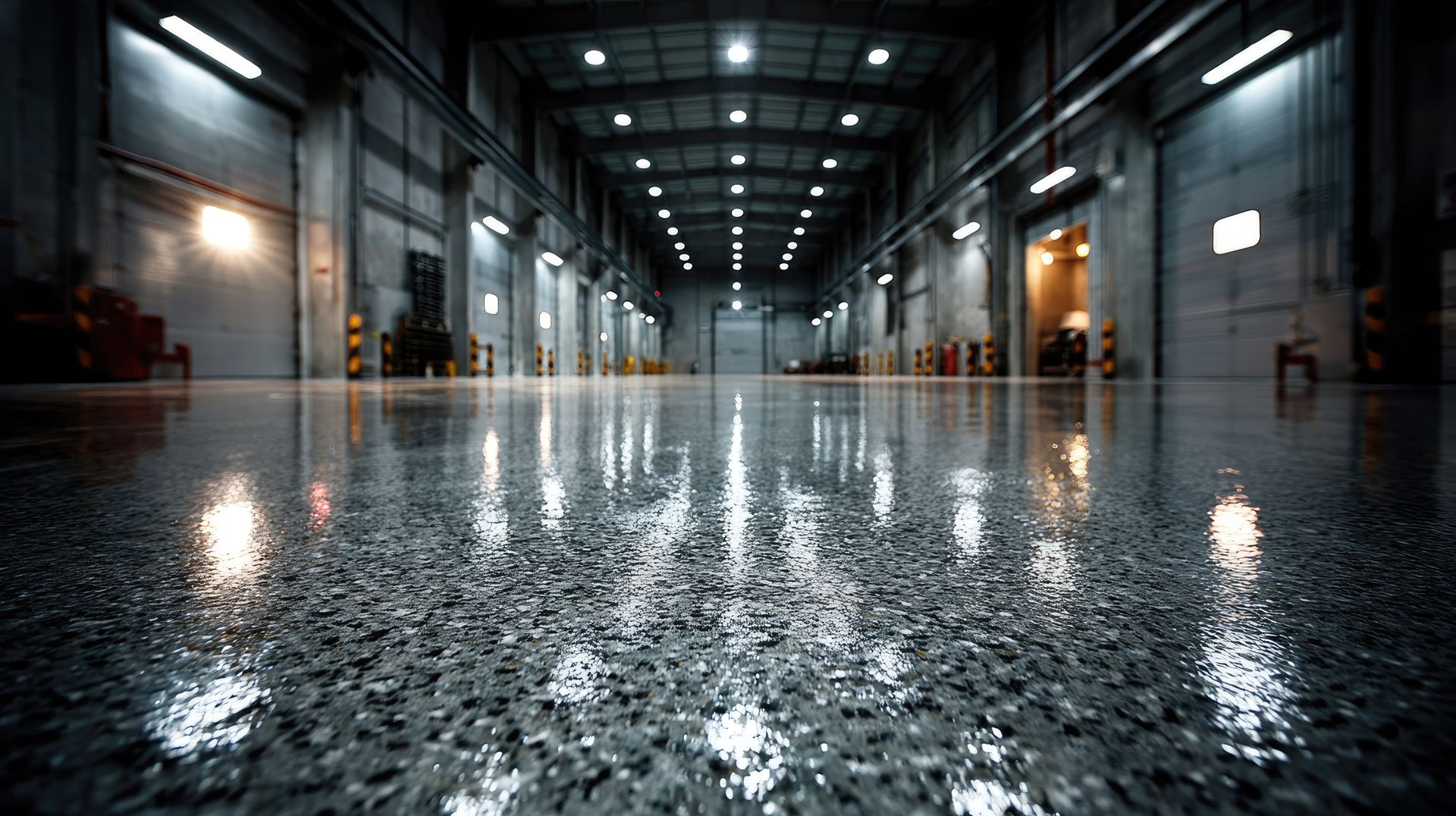
Industrial Environments with Liquids Present
Factories, mechanic shops, and production spaces where liquids are handled.
Quartz Epoxy Is anInvestment in Prevention
An accident on a slippery floor costs more than a slip-resistant coating. Quartz epoxy reduces long-term risks for your team and your clients. Tell us about your high-risk areas.